Patagonia, Bariloche Adventure Vacation
About the race
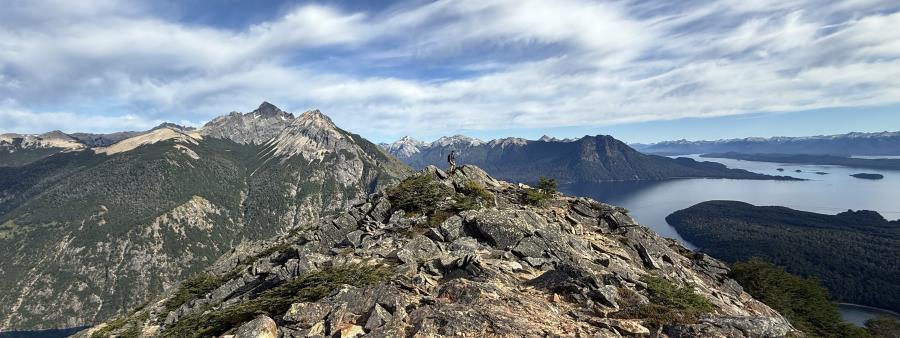
Bariloche sits on the shore of Nahuel Huapi Lake with the Andes rising straight out of the water behind it. Granite spires, alpine lakes, and ridgelines that will be in your head for years.
Some places you visit. Patagonia decides what kind of week you're going to have, and you show up ready for whatever that turns out to be. That's not a warning. It's the whole reason to go.
The part that actually matters is the people. Strangers become the people they text a year later. We are deliberate about who we bring.
Dedicated to the adventurer, to the ones who haven't left home yet, and to the ones who can never come home again.
Why camp?
Refugios are shared dormitory space: bunk beds, thin walls, strangers coming and going all night, headlamps at 4am, and there are always people who snore. When 30 strangers share one room's air for a week, illness moves through a hut fast. Just ask our first year crew. Half the team got very sick, yet they still completed the hardest day.
A tent is yours. It is quiet. If the person in the next tent has a cold, it stays in the next tent.
The water is clear, it is cold, and people swim in it anyway.
Provided camp equipment
- Tents: provided, you pack nothing
- Sleeping pads: provided
- Porters carry every tent, set camp before you arrive, and break it down after you leave
You never carry a tent over a pass. Walk in, and camp is ready.
The one exception: Jakob. At Jakob our group takes its own private room in the refugio, not the shared dormitory.
Hard, and loved anyway
This trip is hard. That's not the surprising part.
The surprising part is what happens anyway. Every group has come off the mountain saying some version of the same thing: that was one of the best weeks of my life. Not despite the loose rock and the cold mornings and the day their legs gave out with four hours still to go, but because of it. The hard parts aren't the price of the good parts. They're the source.
People come back. They bring friends. Strangers walk in on day one and something else entirely walks out on day seven.
We can't promise you good weather. We can promise you a week you'll still be talking about at Christmas.
The people who take care of you
You'll be pushed on the mountain and looked after everywhere else. It's a team we've built over three years, and they are the reason this trip runs the way it does.
The guides
Professional mountain guides who live and work in this range. They hold the local credentials and insurance required to guide in the park, and they read a group the way most people read a forecast.
The hosts
Our Bariloche base team. Bilingual, local, and on call the entire week. They have the groceries handled, the house warm, and an answer ready when something needs solving at 9pm.
The porters
Strong, kind, and faster than all of us. They carry the tents and group gear over the passes, and camp is standing before you walk in, every time.
Not included
- Airfare
- Travel insurance (required)
- Your sleeping bag
- Meals in town outside the house
- Trail lunches and snacks
- Alcohol
- Gratuities
- Costs from itinerary changes, early exit, or personal transport, including changes caused by weather and conditions outside our control
How registration works
Application first. Payment second. No exceptions either way.
- Apply
Ten questions, about ten minutes, no payment due. - We read it
Every application gets read by us, usually within a few days. If anything gives either of us reason to talk, we'll set up a short call before anything else happens. - Register on UltraSignup
Registering places you on the waitlist. Spots are confirmed individually after your application is reviewed. - Deposit: 50% now
Once you're confirmed, a deposit of $1,962.50 (half the trip price) secures your spot. - Balance
The remaining $1,962.50 is due at the start of November. We'll remind you well before. - Onboarding
Packing list, travel notes, group calls at 60 and 30 days out, and proof of travel insurance on file before departure.
Who this is for
This trip is for you, as long as you are willing to take on the risk and the suffering and come out smiling on the other side. It's usually sunshine and good times, but we want you to be mentally prepared for when it is not.
If anything in your application gives either of us reason to talk, we'll talk before you book.
Founder-led: John is on the trail with you the entire week, not managing from the house.
Admission, payment and group rules
Admission and payment
- You are never charged unless you are admitted. Pre-registration stores your card.
- The balance auto-charges November 1. If your card declines, you get an invoice and 7 days to resolve it. After that the spot can be released to the next person in line.
Group size
- Minimum group size is 10. If we do not reach it, we cancel with full notice and a full refund, no later than 60 days before departure.
Conditions and eligibility
- Nature does not read itineraries. Weather and mountain conditions can change the route, the schedule, or the trip itself with little notice.
- Guide decisions made for group safety are final and are not grounds for a refund.
- Participants must be 18 or older. A signed participant agreement and proof of travel insurance are required before departure.
What your entry includes
The course
Each day moves between the base house, tent camps and refugios. Day 2 goes from Catedral up to Refugio Frey, and Day 3 goes up to the ridge and on to Jakob. Day 6 is the hardest day, with Bailey Willis, then Cerro López, then the long descent to Colonia Suiza. Weather has changed this route every year and guides decide where the group goes.
Difficulty, guides and the group
Difficulty
The daily distances may look short to an experienced ultra runner. The terrain will keep you fully engaged anyway: loose rock, steep climbs, snow fields, forest, and exposed sections. The final day is the hardest, with real exposure on the traverse over Bailey Willis and López.
We've had hikers with limited technical experience come through fine on attitude alone. We've also had people learn on day three that this was more than they wanted. The application exists so you make that call before you pay, not on a ridge.
Guide authority
Certified AAGM guides evaluate every participant throughout the trip. If someone isn't ready for the exposed final section, there's a safer alternate line. The guides make that call, not the participant.
The group we're looking for
We're looking for people who do hard things without making it everyone else's problem, who can be tired and cold and still be good company, who follow a guide's call, and who notice when someone else is struggling.
Day-by-day layout
DAY 1 · SAT FEB 6 BASE HOUSE
Airport pickup, shakeout hike, gear check, dinner.
DAY 2 · SUN FEB 7 TENT CAMP · FREY
Catedral up to Refugio Frey and the spires above Laguna Toncek. Camp is set when you arrive.
DAY 3 · MON FEB 8 REFUGIO JAKOB
Up to the ridge, down the Rucaco valley, on to Jakob and its lagoon. Long day, big views. One night indoors.
DAY 4 · TUE FEB 9 BASE HOUSE
Off the mountain. Shower, real bed, real food, resupply.
DAY 5 · WED FEB 10 TENT CAMP · LAGUNA NEGRA
Back up to Manfredo Segre. The water looks black because of the rock.
DAY 6 · THU FEB 11 BASE HOUSE
The hardest day. Bailey Willis, then Cerro López, then the long descent to Colonia Suiza. Last dinner.
DAY 7 · FRI FEB 12 DEPARTURE
Breakfast, then the airport.
Location
City insight: Bariloche
San Carlos de Bariloche, commonly called Bariloche, is the largest city in Argentina's Río Negro province and the seat of its department. It sits in the foothills of the Patagonian Andes on the southern shore of Nahuel Huapi Lake, near the Chilean border, and had a population of 135,755 in the 2022 census. The cool temperate climate brings mild summers and cold, snowy winters, so spring and autumn are the best seasons to race.
Social profiles