Last of the Felascans
About the race
Participants run a 4.167-mile loop every hour, and are eliminated if they fail to complete a loop in an hour.
There is no predefined finish. The winner is the competitor who completes a loop that no other competitors complete. If no competitor outlasts every other competitor, there is no winner.
San Felasco Hammock Preserve State Park is unique and beautiful. It was purchased under Florida's Environmentally Endangered Lands Program in 1974 due to its diversity of plants and geological features.
Base camp, aid and facilities
There will be a maximum of 10'x10' area for each runner to set up "base camp" at the start/finish. There will be no aid stations on course and NO AID outside of the start/finish area. There will be bathrooms and water available at the start/finish. Maybe some ice. Maybe.
Otherwise, you're on your own.
Bell, whistles and swag
You will get a whistle at 3, 2, and 1 minute remaining before the start of each "yard" (as the loops have come to be known). There will be shirts. No other swag, aside from the Last Person Standing who will get a special trophy to commemorate their achievement.
Race philosophy
Not every athlete has the same ability, but every athlete has the same worth. This is really intended to be a simple game.
Brought to you by
- Patrick Gallagher (Last Person Standing at Death at Dupuis (2019), Big's Backyard participant, and aficionado of discomfort)
- Leo Acosta (Race director for Death at Dupuis and all around pain enthusiast)
Rules during the race
To melt it down to the essentials, the rules during the race amount to this:
- Runners must be in the starting corral when the bell rings.
- Runners must start when the bell rings.
- Runners are allowed no assistance after the bell rings, until they complete the yard.
Not having other runners on the course with the runners in the race is an obvious part of number 3.
Crews out on the course is not a good idea. Crews are motivated to "help". Cheering morphs into passing information or taking instructions, and information is aid. The runner is better served to only see their crew in camp.
Fewer rules are better rules. Absolute rules are better rules.
Cancellation policy
No refunds if you decide to drop out. Money from dropouts goes into the donation for the Friends of San Felasco.
The course
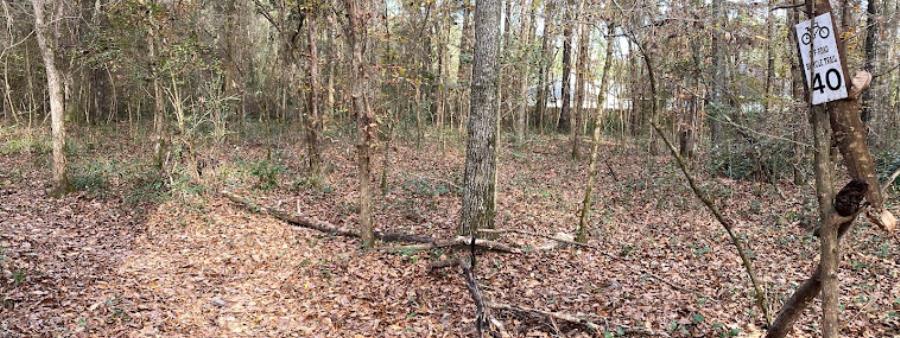
The path of the loop is on trails during the day and along a dirt road after dark. There is no pavement on either course. Each loop is 100 divided by 24 in distance, so a competitor runs 100 miles over a full day of competition.
Location
City insight: Alachau
Alachua is a city in Florida, USA. The climate is humid subtropical, with hot, humid summers and mild winters, so the cooler months from late autumn to early spring are the best time to race.